Inside Commercial Cabinet Doors for Healthcare and Lab Spaces
Cabinet doors in healthcare and lab spaces work a lot harder than most people think. They are touched all day, cleaned again and again, and sit right in the middle of strict protocols for hygiene and safety. When doors fail, chip, swell, or trap dirt, it does not just look bad, it can affect how the space is used and maintained.
Here, we are talking about commercial cabinet doors only, not full cabinet systems. These are the doors that attach to boxes built by millwork shops and installers, and they have their own set of performance demands. Precision manufacturing, consistent finishes, and smart material choices all help these doors support healthcare and lab standards. As a Canadian manufacturer focused on cabinet doors, we at M+J Woodcrafts put a lot of attention into those details for clinical and technical environments.
Performance Demands in Healthcare and Lab Cabinet Doors
In healthcare and lab settings, hygiene starts at the surface. Doors need to be smooth, non-porous, and easy to wipe down. Hospital-grade cleaners are strong, and they are used often, so the surface needs to handle repeated cleaning without fading, softening, or peeling.
Door profile choices matter here. Flat faces and minimal grooves keep dust and splashes from settling. Fewer ridges and seams mean fewer places where contaminants can sit. Seamless or tightly wrapped edges help stop moisture from getting into the core.
Day-to-day, these doors see a lot of use. Common stresses include:
- Frequent opening and closing
- Contact with carts, stretchers, and mobile equipment
- Humidity and temperature swings between different rooms
- Occasional bumps, scrapes, and accidental impacts
Substrate selection, thermofoil wrapping, and high-performance laminates all play a part in resisting chips, dents, and swelling under these conditions.
Safety and compliance also guide door choices. Fire and building codes, infection prevention guidelines, and standards for labs, pharmacies, and clinics all influence the specifications that designers and engineers set. Our role is to supply cabinet doors that match those written specs consistently, so the full system can meet the required standards once installed.
Materials and Finishes That Work in Clinical Spaces
Thermofoil doors are a strong option when you want seamless, hygienic performance. The foil is wrapped around the face and edges of a shaped MDF core, which helps reduce exposed seams where moisture or contaminants can reach the substrate. For healthcare and labs, that wrapped edge can support easier cleaning and more stable performance when the doors are specified and installed correctly.
Key advantages of thermofoil in these environments include:
- Smooth, easy clean surfaces
- Colours and patterns that stay consistent across projects
- Reduced risk of edge swelling compared with some painted options
High-pressure laminate doors are often chosen for higher-traffic and lab-intensive zones. A durable laminate face on a stable core offers strong resistance to abrasion and many common chemicals. Flat panel laminate doors are usually preferred for cleanability, since there are no deep profiles for dirt or splashes to hide in.
Painted MDF doors still have a place in healthcare and lab projects, especially where design and wayfinding matter. Reception areas, family spaces, and offices that sit beside clinical zones often use painted doors to support colour stories or branding. With a controlled finishing process, you can get good colour consistency across large projects and improve chip resistance compared with site finished work.
Design Details That Keep Doors Practical and Calm
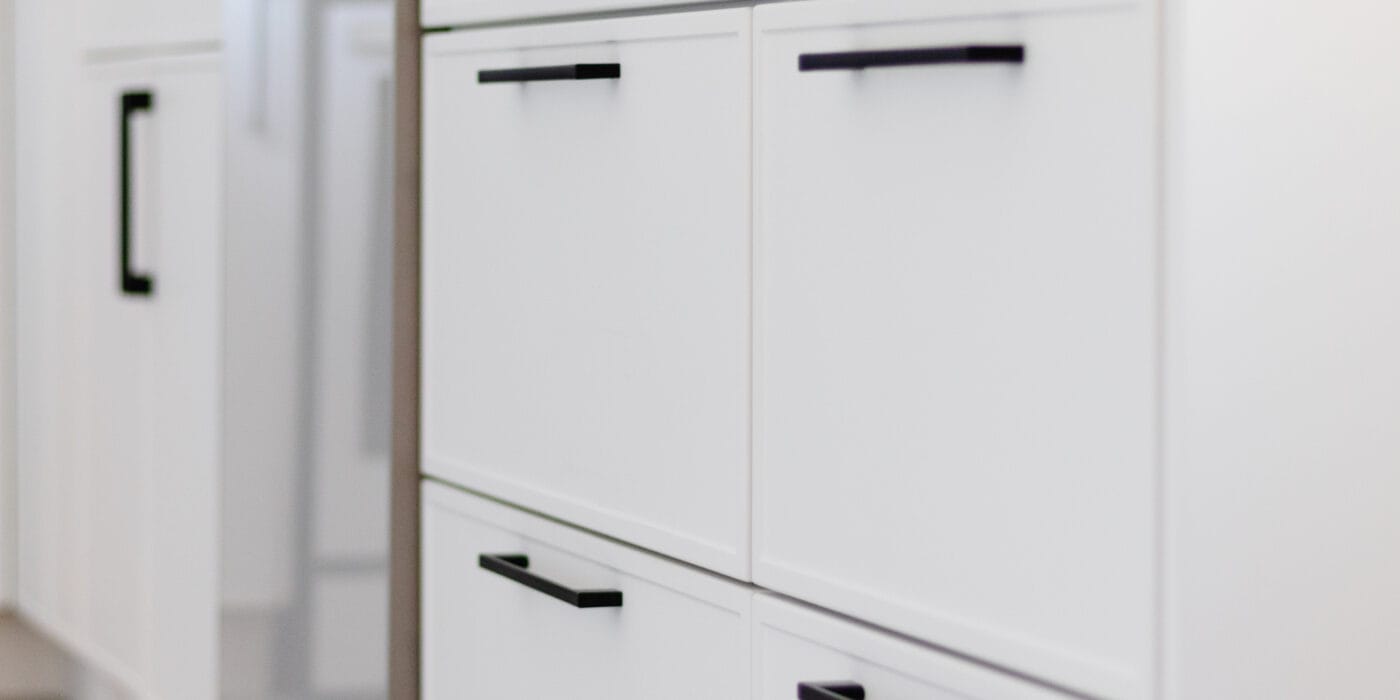
Door style plays a quiet but important role in clinical settings. Flat slab doors are often the easiest to clean and give a very simple, calm look. Shaker-inspired and minimalist profiled designs can still work well if the profiles are kept shallow and easy to wipe.
When the same door family carries across patient rooms, labs, storage, and staff areas, it supports wayfinding and makes spaces feel more orderly. Staff can quickly recognize where supplies and equipment are likely stored just by the look of the doors.
Edges, corners, and joints matter just as much as faces. Eased edges help avoid sharp corners that can chip or be uncomfortable to touch. Tight seams and precise joints help keep moisture out and hold the structure stable over time. With advanced CNC machining and careful wrapping processes, we keep tolerances tight so each door matches the next one.
Finish choices also play into comfort and clarity:
- Lower glare finishes help under strong hospital lighting
- Soft, muted colours support calmer patient environments
- Strong accent colours can mark staff-only or hazard areas
- Wood-look laminates and thermofoils can soften a space without giving up cleanability
Manufacturing Quality for Complex Healthcare and Lab Projects
Large healthcare and lab facilities often get built or renovated in phases. Doors on one floor may be produced months apart from doors on another. Precision and repeatability are key, so every phase still lines up visually and physically.
We rely on controlled production parameters, digital design files, and standardized tooling to keep profiles, dimensions, and edge details consistent. This helps architects, designers, and builders trust that a door style chosen early in planning will look the same well into later phases.
Finish consistency is just as important. When dozens or hundreds of doors sit side by side, even small shifts in colour or sheen can stand out. Careful colour matching, sheen control, and surface checks help reduce variation from samples to full production runs.
On-site, millwork shops and builders integrate our doors into their cabinet systems. We focus on:
- Accurate sizing
- Consistent drilling patterns when specified
- Reliable packaging to protect doors in transit and on site
This support helps their teams move faster and reduce surprises during installation.
Designing for Real Conditions in Canadian Healthcare and Labs
Canadian facilities see wide swings in temperature and humidity between seasons. That affects how doors move and how long they stay true. Choosing stable substrates and matching them with the right finishes helps keep door movement under control and reduce warping or swelling.
Areas near exterior doors, sterilization rooms, and certain labs can face higher moisture, heat, or air changes. Specifying suitable core materials and finishes in those zones is an important piece of long-term performance planning.
Cleaning regimes are another big factor. Some spaces are wiped down a few times a day, while others are disinfected many times per shift. Designers should confirm which cleaners are used and how often, then select materials that can live with that schedule. Our team works with design and millwork partners to suggest door constructions that stand up better to aggressive cleaning.
Future-proofing matters too. Healthcare and lab spaces are often updated or expanded. The ability to reorder matching cabinet doors for new phases or for replacement after damage can save time and keep interiors looking consistent. Because we focus on repeatable manufacturing and documentation, we can support those long-term needs for the life of the space.
As M+J Woodcrafts, we centre our work on cabinet doors only, which lets us go deep on construction details, finishes, and repeatability. For designers, architects, builders, developers, millwork shops, and homeowners planning healthcare or lab style environments, that focus can help bring reliable, high-performing commercial cabinet doors into every project.
Get Started With Your Project Today
Bring your next commercial build or renovation to life with precision-crafted commercial cabinet doors tailored to your specifications. At M+J Woodcrafts, we work closely with you to ensure the right materials, finishes and details for your space. Share your drawings, measurements or ideas and we will provide practical guidance and a clear path forward. Ready to move ahead with your project, or have questions about options and timelines, simply contact us.