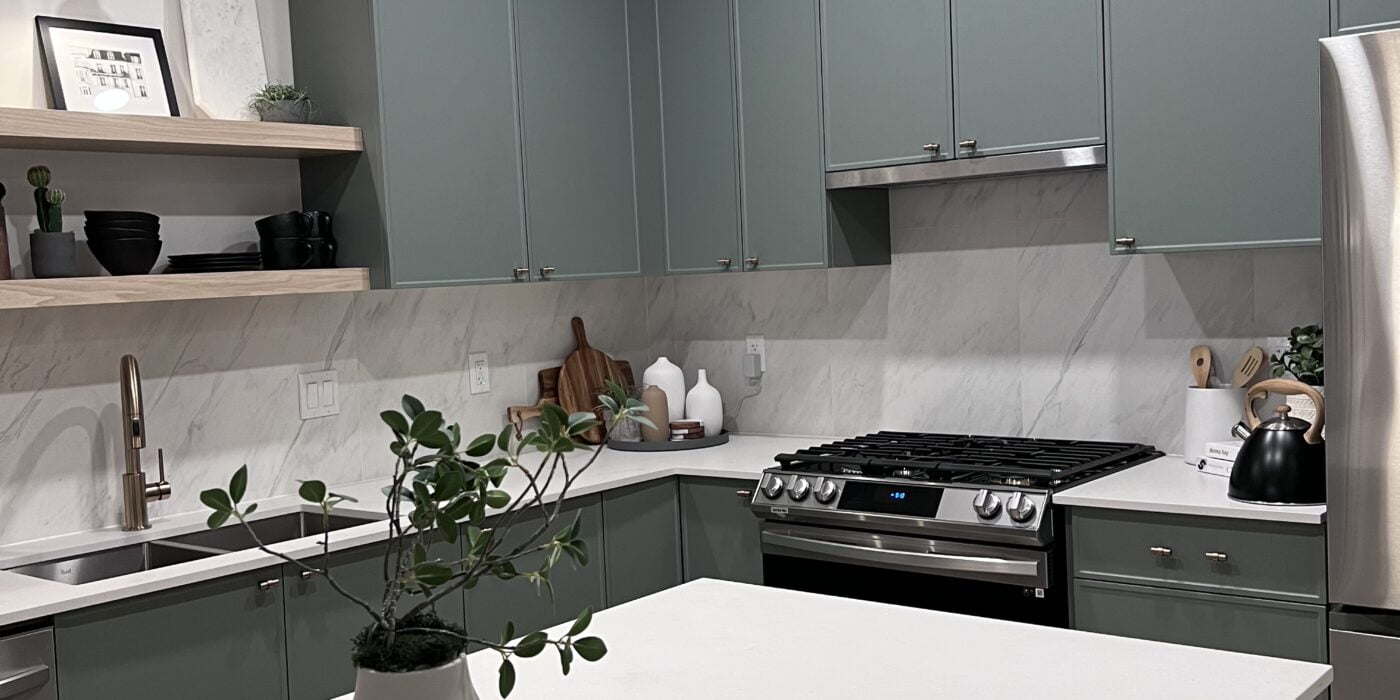
Quality custom cabinet doors should be clear to you long before they arrive on site. If you can read the signs early, you avoid redesigns, re-approvals, and last‑minute changes once shop drawings and site conditions are set. That matters on any schedule, but it is especially important when projects are stacking up and trades are trying to stay on track.
Custom cabinet doors do a lot more than close a cabinet opening. They carry the visual story of a kitchen, bathroom, or millwork package, and they take the daily wear that comes with real use. From multi‑unit residential towers to one‑off custom homes, the right door construction, finish, and detailing will decide how the space looks on day one and how it holds up years later. In this article we share a practical checklist you can use to recognize quality before you sign off on a specification.
How Quality Custom Cabinet Doors Are Built
First, it helps to separate what we are actually talking about. Custom cabinet doors are not full cabinets. We do not build boxes, hardware layouts, or interiors. We focus on the door fronts and related components that you see and touch: panels, drawer fronts, trims, and fillers.
A quality door starts with three pillars:
- The core or substrate
- The machining and joinery
- The finishing process
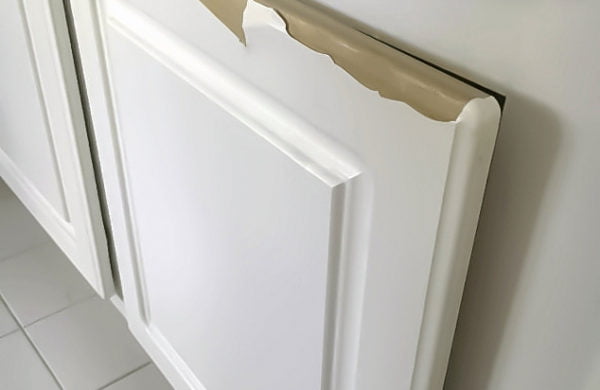
For thermofoil and 3D laminate doors, we work with engineered cores like MDF that are chosen for density and smoothness. The door is machined to its final profile, then wrapped in a thermoformed laminate under heat and pressure. The key to quality here is tight control of temperature, vacuum, and press time so the laminate bonds properly and follows every profile detail without bubbles, wrinkles, or weak spots.
Laminate doors, such as HPL or TFL-faced slabs, rely on flat, stable cores and precise edge treatments. Good manufacturing shows up in clean edges, carefully matched patterns, and corners that feel solid, not hollow or sharp. Painted doors again start with the right MDF, then move through sanding and priming steps that need to be consistent so the paint sits even, with no fibre raise or patchy areas.
Because we manufacture in Canada, we pay close attention to our climate. Seasonal swings in temperature and humidity can move materials, so we build with dimensional stability in mind and manage our production environment to keep doors as consistent as possible. That consistency is what helps finishes last and joints stay tight over time.
Assessing Materials and Finishes for Real‑World Use
Not every custom cabinet door needs the same material or finish. The right choice depends on how and where it will be used.
Common options include:
- MDF cores for smooth painted or routed profiles
- Engineered substrates for slab doors needing stability
- Thermofoil and 3D laminates for wrapped profiles and routed designs
- HPL and TFL laminates for durable, flat slab faces
- Painted finishes for colour flexibility and classic styles
Each has a place. For example, high‑traffic rental units often benefit from laminate or thermofoil because they are easier to clean and resist everyday bumps. Painted doors can be a strong choice for custom homes and feature spaces, especially where profile detail is important and the environment is more controlled.
When you are choosing finishes, think about:
- Traffic level and frequency of cleaning
- Humidity, such as in bathrooms or near dishwashers
- Light exposure near large windows or patio doors
- Temperature swings in seasonal cottages or secondary homes
We put a lot of attention into finish consistency and edge treatments so that fronts, panels, trims, and fillers work together as one story. That matters on large projects where different trades install different areas, and it matters again later if a new phase or renovation needs to match what was done before.
Design Details That Signal Manufacturing Quality
You can tell a lot about a door by simply looking closely and running a hand along the surface. High‑quality custom cabinet doors usually share a few clear visual and tactile signs:
- Crisp, even profiles with no fuzzy edges
- Tight seams and joints where parts meet
- Clean, smooth edges without chipping or over‑sanding
- Consistent sheen and colour from door to door
- Patterns or grain that align sensibly across panels
Profile selection also says a lot about the manufacturer behind the door. Simple slab fronts may look easy, but they still need accurate sizing and edge work to hang straight and line up cleanly. Shaker and routed profiles demand accurate tooling and sharp machining to keep corners square and panel reveals even.
Details such as edge radius affect both the design language and how the door feels in the hand. A smaller radius can look more modern but must be produced cleanly so it does not chip. Sizing tolerances matter for installers, especially across long runs or banked doors. Our goal is to give designers broad flexibility, from flat contemporary slabs to classic Shaker to integrated finger pulls, while keeping those quality markers present across every unit, floor, or building.
Performance Testing Before You Approve the Spec
Before you commit a finish-schedule or door style to a full project, do a quick set of checks on real samples. You do not need a lab to spot strong or weak performance.
Simple tests include:
- Lifting the door to feel weight and rigidity
- Looking at the back and edges for clean work, not just the front
- Running your hand over the face to feel for any telegraphing from the core
- Lightly tapping corners and edges to sense solidity
For finishes, ask how the door is expected to behave near common kitchen and bath conditions. Thermofoil and laminates should stand up well around everyday cooking heat, minor moisture, and repeated cleaning with gentle products. Painted finishes should be properly cured and sanded so they resist minor scuffs and do not mark if wiped with a soft cloth.
It is also reasonable to ask manufacturers for general performance information about their materials and processes. We build reliability into our work through controlled production, repeatable finishing systems, and careful material selection so specifiers can expect consistent results from one project to the next.
Coordinating Large Projects Without Compromising Quality
For builders, developers, and millwork shops, there is another layer to cabinet door quality: repeatability. It is one thing to produce a beautiful sample, and another to match that same door across towers, phases, or repeat home models over several build cycles.
Good planning here includes:
- Standardized door specifications that can be reused
- Clear finish codes that stay consistent over time
- A defined profile library shared across the project team
These tools help architects and designers keep a coherent design language while making documentation easier. On our side, we support this with production records and door programs that can be repeated later. That way, if a new phase or renovation needs to align with an earlier stage, the doors can be manufactured to match as closely as possible, rather than re‑invented from scratch.
Choosing M+J Woodcrafts as Your Door Manufacturing Partner
When you look at a custom cabinet door sample, the quality signals you are watching for are not random. Stable cores, clean machining, controlled finishing, consistent colour and sheen, and smart design details all point to a manufacturing process that is under control and built for repeat work.
At M+J Woodcrafts, our focus is on those details for thermofoil, laminate, and painted custom cabinet doors. Designers, architects, builders, developers, millwork shops, and homeowners choose our doors because they want reliable Canadian manufacturing, finish consistency across units and phases, design flexibility that still installs easily, and durable performance that respects real‑world use. By recognizing quality early and asking the right questions, you can lock in the cabinet door standard you want long before the first box is hung on site.
Get Started With Your Project Today
Bring your vision to life with M+J Woodcrafts by choosing from our expertly crafted custom cabinet doors tailored to your space. We will work with your measurements, style preferences, and budget to manufacture custom cabinet doors for your project. If you have questions or need guidance before you order, simply contact us and our team will help you plan your next project with confidence.