How Material Choices Shape Commercial Cabinet Doors
Material choice for commercial cabinet doors is a design decision that affects how a space looks on day one and how it performs years later. In commercial settings, doors are opened, bumped, wiped down, and pushed far more than in a typical home. If the core, finish, and edges are not planned carefully, small issues can quickly turn into worn corners, swelling, or chipped faces.
Commercial cabinet doors play quiet but important roles across retail, hospitality, multifamily, healthcare, and office spaces. They hide storage, frame work areas, and carry brand colours and finishes from one room to the next. Because traffic and cleaning demands are higher, expectations for durability, consistency, and cleanability also rise.
At M+J Woodcrafts, we focus on custom cabinet door manufacturing for these kinds of projects. We work with thermofoil, laminate, and painted, cabinet door solutions, and we pay close attention to finish consistency and precision. In this article, we compare key materials, how they behave in real-world commercial conditions, and how consistent manufacturing supports phased work or multi-location rollouts.
What Matters Most in Commercial Cabinet Doors
When we talk about commercial cabinet doors, three things sit at the top of the list: performance, consistency, and cleanability.
Performance under heavy use means doors must tolerate:
- Frequent opening and closing in spaces like healthcare corridors or student housing
- Regular impacts from carts, bags, and equipment
- Ongoing cleaning cycles and exposure to humidity near sinks or mechanical rooms
- Seasonal swings in temperature and moisture, especially in Canadian climates
Core stability helps doors stay flat over time, while strong edge protection keeps moisture out. A resilient finish helps resist chipping and visible wear so the doors still look good to tenants, guests, and staff.
Consistency across spaces and phases is just as important. Designers and developers often roll out the same concept in multiple locations or in stages across a building. That calls for:
- Repeatable colour and sheen from batch to batch
- Matching profiles so new phases line up with original millwork
- The ability to order the same door style later for renovations or tenant turnovers
Tight manufacturing control lets us colour-match and profile-match doors months or even years later, which supports long-term planning instead of one-off choices.
Compliance and cleanability also drive material selection. Many commercial interiors need:
- Smooth, non-porous surfaces that are easy to wipe
- Finishes that stand up to regular disinfecting products
- Doors that do not trap dirt in open grains or rough edges
By thinking about cleaning and finish performance during design, it is easier to avoid early replacement and keep interiors looking aligned with original standards.
Thermofoil Doors for Durable, Seamless Surfaces
Thermofoil cabinet doors start with an MDF core, which can be routed with profiles or left flat. A heated 3D laminate is then vacuum-formed over the face and edges, creating a seamless surface over the front and profile. This process removes open paint lines on routed areas and gives a consistent finish from door to door.
In commercial environments, thermofoil is valued for:
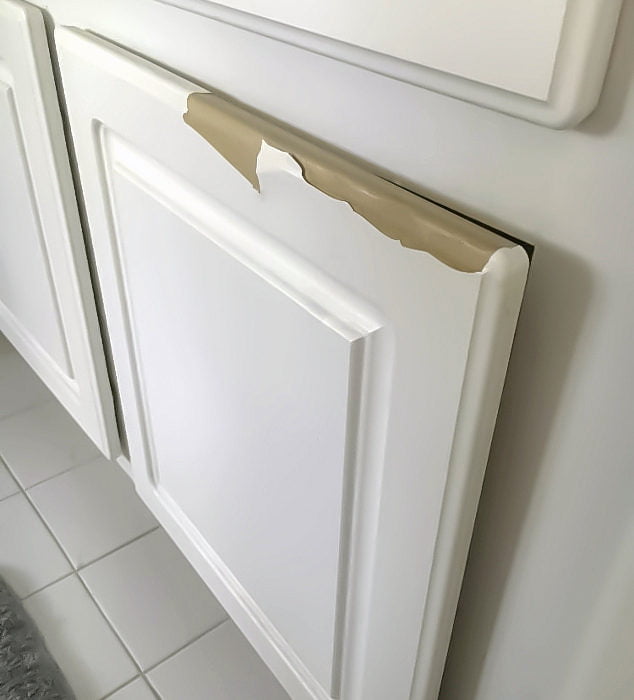
- Resistance to chipping on detailed profiles
- No paint lines to crack at corners
- Even colour and sheen across large runs
These qualities work well in reception desks, amenity kitchens, staff rooms, and other high-visibility zones where clean lines matter.
Modern thermofoil includes solid colours, supermatte options, subtle textures, and woodgrain looks. Designers can echo natural materials while sidestepping the maintenance of real wood. A common approach is to use neutral thermofoil cabinet doors as a quiet base, then add bolder surfaces on feature walls, counters, or accent millwork to carry the brand story.
Thermofoil often excels in:
- Multifamily suites and rental units
- Student housing kitchens and vanities
- Office support spaces and staff areas
Our focus at M+J Woodcrafts is on precise routing for crisp profiles, carefully controlled thermoforming cycles for strong adhesion, and quality checks designed to reduce the risk of delamination in demanding settings.
Laminate Doors for High-Traffic Commercial Spaces
Laminate cabinet doors, typically using HPL or decorative laminate on a stable core, are well suited to high-traffic spaces. They offer strong resistance to everyday scratches, stains, and bumps, which is helpful in:
- Classrooms and school storage
- Retail back-of-house areas
- Institutional and utility rooms
Edge treatments matter just as much as the face. Good edgebanding and profile choices reduce weak points where moisture or impact could cause damage. In heavy-use environments, clean, well-bonded edges are a quiet source of long-term value.
Laminate design options are wide, with realistic woodgrains, solid colours, patterns, and finishes that range from matte to higher sheen. This range supports both budget-minded spaces and more premium interiors using coordinated textures. Because designs can be repeated, laminate helps carry specific colours and looks across multiple sites or phased work tied to standard construction cycles.
At M+J Woodcrafts, we put a lot of effort into panel processing, machining, and edgebanding. Tight tolerances and straight lines help laminate cabinet doors integrate cleanly with cabinet boxes and hardware selected by millwork shops, builders, and developers. Reliable bonding and stable construction allow project partners to focus on the rest of the millwork package with confidence.
Painted and Hybrid Solutions for Refined Commercial Design
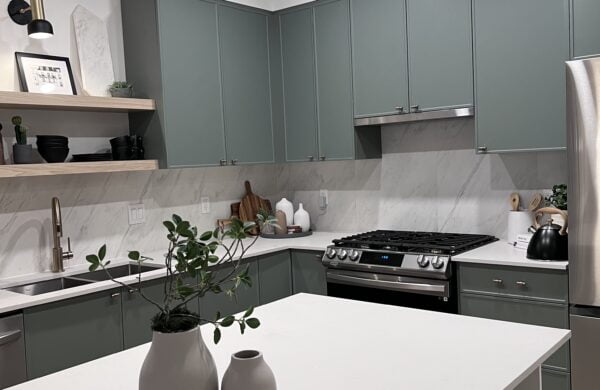
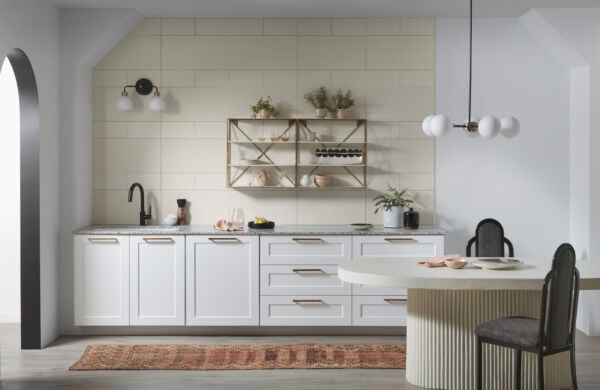
Painted cabinet doors come into their own in settings where refinement is key. Boutique offices, upscale retail, hospitality suites, and executive-style amenity areas often call for the depth and character of a painted finish. Routed MDF doors can deliver crisp profiles, while custom colours help match brand standards or architectural palettes.
At the same time, painted finishes are more sensitive to impact and edge wear than laminate or thermofoil. They are better suited to areas with lower physical abuse and thoughtful use patterns. To balance beauty and durability, many design teams:
- Use painted doors on feature walls or focal millwork
- Select thermofoil or laminate for service zones and storage
- Keep painted cabinets away from cart paths or rough handling
We support painted finish quality through careful surface preparation, priming, and spray environments that help achieve smooth, even sheen across commercial runs. Colour control, sample approvals, and finish records make it easier to repeat a concept in later phases or in new properties.
Matching Materials to Real-World Commercial Scenarios
Different commercial projects call for different mixes of materials. Rather than picking a single finish for an entire program, it often makes sense to combine options based on how each space is used.
In multifamily, student housing, and rental properties, turnover brings extra wear to kitchenettes, vanities, and storage. Thermofoil or laminate cabinet doors often give the best performance-to-maintenance balance in suites, since they clean easily and stand up well to changeover cycles. Shared amenity spaces can then step up to painted or specialty laminate doors for a more elevated look.
Office, healthcare, and institutional projects usually need very easy-to-clean, resilient finishes around sinks, lab zones, copy rooms, and medical storage. In these areas, laminate and select 3D laminate cabinet doors are strong candidates, especially when edge integrity and moisture strategies are planned early. Simple, clear cleaning routines become easier when finishes are consistent and non-porous.
Retail, hospitality, and branded environments often use painted doors to deliver strong brand colours or a refined front-of-house presence. Behind the scenes, laminate or thermofoil can handle the higher touch and movement of staff zones and back-of-house storage. Across all of these scenarios, our role at M+J Woodcrafts is to keep finish and profile consistency reliable so the same material mix can be repeated across locations or as properties grow over time.
Choosing M+J Woodcrafts for Your Next Commercial Project
For us, cabinet door material choice is about turning design intent into something that can be made again and again with confidence. We work with designers, architects, builders, developers, millwork shops, and homeowners involved in commercial projects to align thermofoil, laminate, and painted options with performance needs, brand goals, and long-term plans.
By focusing on precise machining, dependable construction, and consistent finishes, we help projects achieve fewer replacements, more stable appearances over time, and maintenance that fits day-to-day operations. When commercial cabinet doors are treated as a core part of the specification strategy, not an afterthought, the result is a space that functions well, looks coherent, and supports property value for years.
Get Started With Your Project Today
If you are planning a new build or renovation, we can help you choose the right commercial cabinet doors to match your design, budget, and timelines. At M+J Woodcrafts, we work closely with you from initial concept through to final delivery so your cabinetry is ready when you need it. Reach out to our team to discuss specifications, custom options, and volume pricing, and we will put together a tailored solution. Have questions or need a quote started today? Simply contact us and we will respond promptly.