Specifying High Gloss Doors That Perform at Scale
High-gloss cabinet doors can give a multi-unit project a very clean, modern look. In corridors, suites, and amenity spaces, that reflective surface helps small areas feel brighter and more open. But at scale, a glossy finish is not just about looks. It has to stand up to daily use, clean up quickly, and stay consistent from the ground floor to the penthouse.
Designers, architects, builders, developers, and millwork shops all feel the pressure when there are hundreds of identical units. If gloss levels vary, if the finish marks too easily, or if damaged doors are hard to replace, the design that looked great on the mood board turns into a maintenance headache. Our goal is to share a manufacturing-focused way to specify high-gloss cabinet doors that keep their appearance and performance for the full life of the project.
In multi-unit residential and mixed-use work, the key challenges with high gloss are clear:
- Matching gloss levels and colour across very large orders
- Keeping surfaces looking pristine under heavy, repeat cleaning
- Making future repairs and replacements simple in occupied spaces
When you plan for those from the start, high-gloss cabinet doors move from “risky” to “reliable.”
Understanding High Gloss Cabinet Door Materials and Finishes
High-gloss is about more than just “shiny.” In practice, it is a combination of:
- Surface reflectivity, how crisp the reflections look
- Perceived depth, that almost glass-like feel
- Interaction with light, including natural, LED, and accent lighting
A straight corridor with downlighting will show every wave and mismatch, while a compact kitchen with mixed lighting will highlight fingerprints and smudges. Colour also matters: darker finishes show more reflection and marks, lighter finishes hide small flaws but may reveal seams more.
Common high-gloss cabinet door solutions include:
- Thermofoil cabinet doors and 3D laminate cabinet doors that wrap a decorative film over a routed core, great for seamless faces and soft edges
- Flat laminate cabinet doors using high-pressure or similar laminates on a core, with visible edges that can be detailed cleanly
- Painted MDF doors, with a sprayed high-gloss coating over a machined core
Each behaves differently:
- Edge profiles: 3D laminates support routed profiles without exposed edges, while flat laminates and paint usually show a defined edge detail
- Impact resistance: dense cores and quality laminates tend to resist small bumps well, while some high-build paints can be more prone to chipping on sharp corners
- Seam visibility: wrapped thermofoil and 3D laminate doors can hide seams on the face, with only a small back seam, while laminate and paint need careful edge work
At M+J Woodcrafts, our focus is on process control. Substrate selection, adhesive systems, press technology, and curing all affect gloss level and flatness. When those are tightly controlled, gloss doors from different batches and different floors still look like they belong together, which matters a lot when a tenant compares their unit to the one next door.
Designing for Durability in Multi-Unit Environments
High-gloss cabinet doors in multi-unit projects go through more than a typical single-family home. Some of the main stresses include:
- Frequent cleaning by different people, with different cleaning habits
- Impacts from move-ins, move-outs, and building maintenance
- Seasonal humidity swings, especially in areas with cold winters and warm summers
- Use by many occupants over time, with varied care levels
To keep doors looking good, it helps to make a few clear decisions early:
- Choose dense, stable cores that are less likely to warp or swell
- Match finish type to location, for example, durable high-gloss thermofoil or laminate in high-touch kitchen and bath zones
- Prefer profiles with softened edges rather than sharp corners that can chip more easily
- Allow for finger-pull details, hardware placement, and clearances that reduce accidental hits
Our thermofoil and laminate cabinet doors are built around dimensional stability and surface resilience. Careful core selection and controlled pressing help limit door movement when humidity changes, and proper adhesives help the surface stay bonded even after repeated cleaning. For project teams, this supports warranty expectations and helps cut down on service calls over time.
Cleaning and Maintenance Standards for High Gloss at Scale
High-gloss cabinet doors look great when they are clean, but they will show fingerprints and streaks if the cleaning routine is not realistic. With hundreds of suites, the property team needs something simple and repeatable.
Gloss finishes interact strongly with light. Fingerprints, smears, and small scratches show up faster in bright side lighting or near windows. Specifying a care plan at the design stage helps keep the look consistent across units.
Good cleaning guidance usually covers:
- Products: mild, non-abrasive cleaners that are safe for the specific finish
- Tools: soft, non-scratch cloths, not scouring pads or rough sponges
- Technique: light pressure, wipe and dry, clean spills quickly instead of letting them sit
Harsh chemicals, abrasive powders, or aggressive scrubbing can dull the gloss, create micro-scratches, or weaken adhesive bonds over time, especially on wrapped doors. That is why we put a lot of attention into how our finish systems handle cleaning and chemical exposure. At M+J Woodcrafts, finishes are tested for cleanability and resistance to common household products so we can support clear care guidelines.
Those care basics can then be built into:
- Turnover packages for new owners or tenants
- Operations and maintenance manuals for the building team
- Strata or rental documentation so cleaning staff know what is allowed
When everyone follows the same simple steps, the high-gloss look stays sharp for longer.
Planning for Repairability and Replacement Across Units
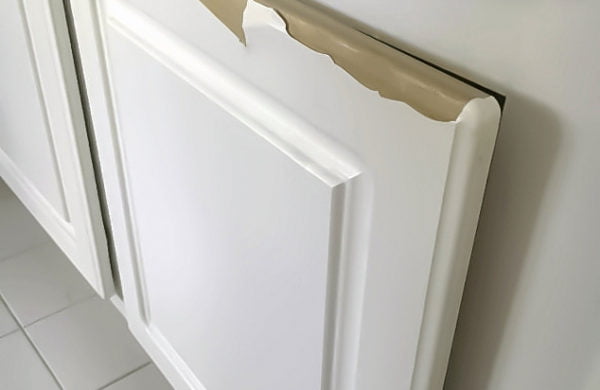
In multi-unit projects, damage will happen. A moving box clips a corner, a door gets scratched during a renovation, or a tenant reports swelling after a leak. Planning for repairability at the specification stage saves time and stress later.
Key points to think about early:
- How easy is it to replace a single door without redoing the whole kitchen front?
- Will identical or very close matches still be available years later?
- Are the profiles and colours standard enough to repeat across phases or buildings?
Helpful strategies include:
- Documenting door styles, profiles, and finish names in project records
- Standardizing high-gloss cabinet doors across multiple phases so replacement options stay consistent
- Choosing materials and finishes where partial replacements blend well with existing doors
At M+J Woodcrafts, our cabinet door manufacturing is set up for repeatability. Digital finish records, controlled colour matching, and consistent door profiles mean that, when a millwork shop or property team needs a small batch of replacement doors, we have a clear starting point. That supports quick, precise replacements with less disruption to occupants.
Leveraging M+J Expertise for Confident High Gloss Specifications
When you combine the right materials, thoughtful construction details, clear maintenance expectations, and a plan for future repairs, high-gloss cabinet doors become a dependable feature for large projects. Instead of being a “high-risk” style choice, they turn into a repeatable standard that suits many suites and amenities.
Project teams choose M+J Woodcrafts because we focus on consistent finish quality across large orders, strong technical understanding of thermofoil and laminate cabinet doors, and repeatable solutions that support multi-phase work. By involving our team early, designers, architects, builders, developers, and millwork shops can review gloss levels, edge details, substrate choices, and performance goals together, so the final high-gloss cabinet doors deliver the intended look and longevity in every unit.
Get Started With Your Project Today
Bring a modern, polished look to your space with our custom-crafted high-gloss cabinet doors designed to fit your exact specifications. At M+J Woodcrafts, we work closely with you to match the style, colour, and finish that suits your project. Whether you are updating a single room or planning a larger renovation, we are here to help you move from idea to installation with confidence. Have questions or ready for a quote? Simply contact us to get started.